
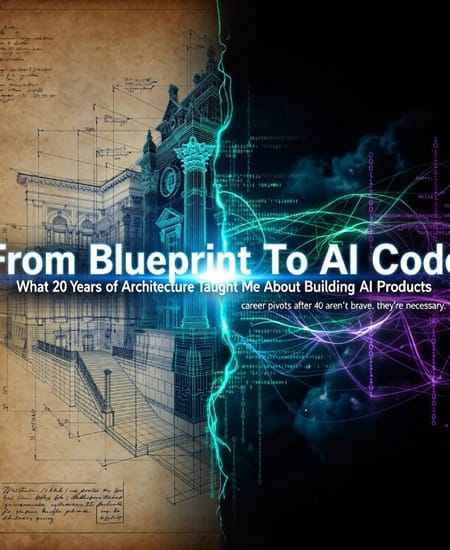
As a welcome to the community, she’s sharing her story of career reinvention and why systems thinking — whether in buildings or Kubernetes — is at the heart of reliable technology.
Here's an uncomfortable truth: Career pivots after 40 aren't brave. They're necessary.
Five years ago, I was designing buildings in Moscow. Today, I'm building partnerships for an AI startup that fixes Kubernetes incidents while developers sleep.
No, this wasn't planned. And no, I didn't have a "passion for tech" story ready for interviews.
The Move That Changed Everything
Relocating from Moscow to a small German town wasn't just a geography change—it was a forced reset. Try finding architecture work in a town where everyone knows everyone, and "the new Russian architect" isn't exactly what the market ordered.
I had two choices: complain about the unfairness, or use the time I suddenly had.
I chose curiosity.
Why AI? Why Not Just "Learn to Code"?
Twenty years of architecture taught me one thing: systems thinking matters more than tools. Whether you're designing a building's structure or debugging a production incident, you're solving for resilience, efficiency, and human experience.
AI wasn't just "the hot new thing." It was the field where I could apply everything I knew about complex systems—but with the potential to impact millions of people instantly, not over decades of construction cycles.
Plus, let's be honest: watching AI agents autonomously fix infrastructure issues feels a lot like seeing a building support itself during an earthquake. Except it happens in milliseconds, not years of engineering.
From Code to Conversations
Here's where it gets weird.
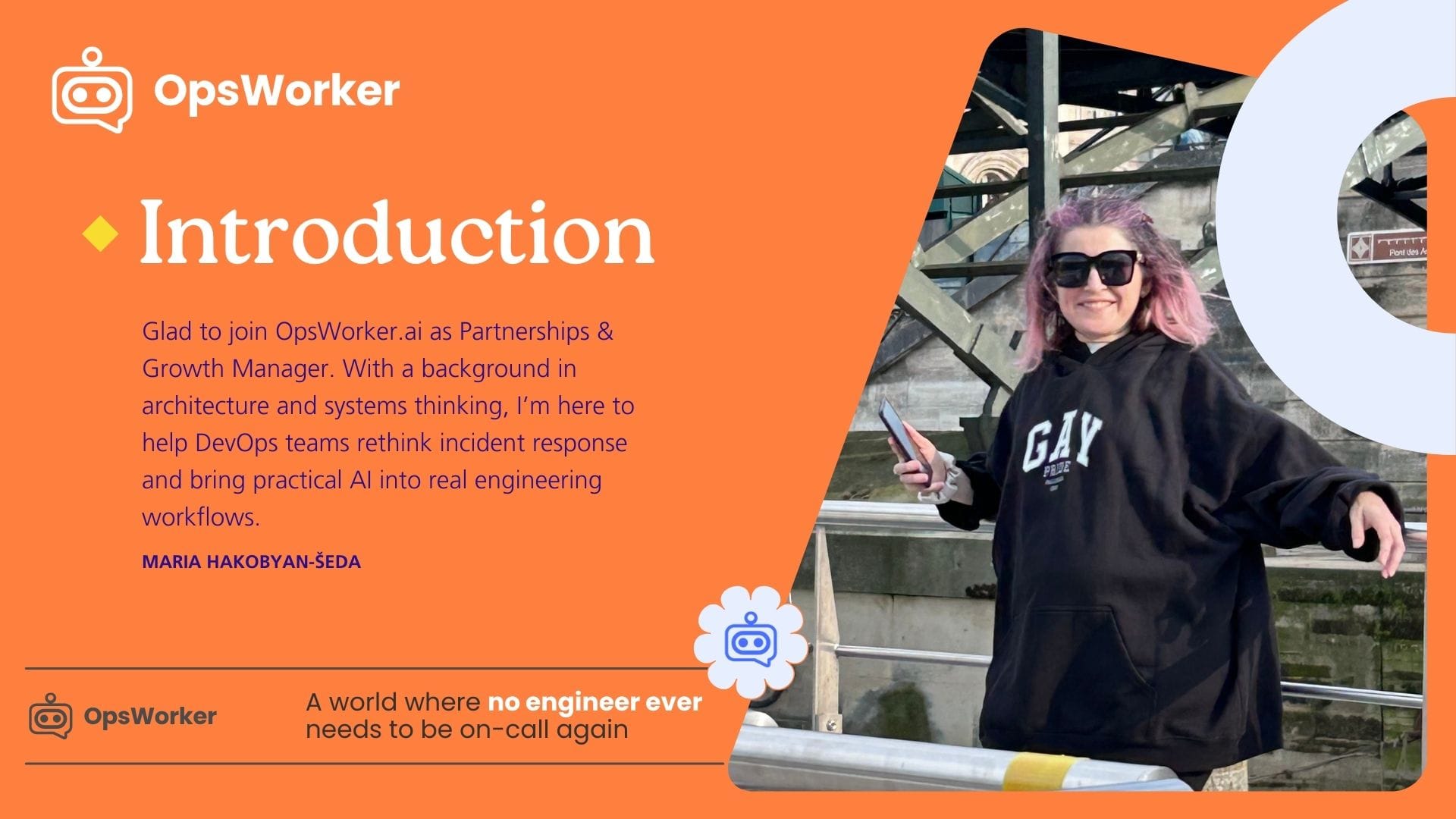
After months of deep-diving into AI development, I joined an early-stage startup - OpsWorker - not as a developer, but as a Partnerships and Growth Manager.
Zero experience in sales. Zero experience in partnerships. Just a technical background and a belief that if I could understand the product deeply enough, I could talk about it authentically.
Turns out, understanding the pain you're solving beats a polished sales pitch every single time.
When I talk to SRE and Software Development teams about Kubernetes incidents at 3 AM, I'm not reading from a script. I genuinely get why an AI SRE co-worker that fixes issues autonomously isn't just "nice to have"—it's the difference between sleeping through the night and burning out by Q2.
The "Aha" Moment Nobody Talks About
The most surprising realization? The world is shifting faster than our mental models can keep up.
Political tensions rise. Markets fragment. Supply chains break. Yet somehow, technological progress doesn't pause for any of it. AI development, DevOps innovation, infrastructure automation—none of it waits for "the right moment."
In architecture, you plan for decades. In AI, you ship, iterate, and adapt—sometimes within the same week.
That shift in tempo? That's what makes this transition both terrifying and exhilarating.
What I'm Learning (In Real-Time)
I don't have ten years of partnership experience to share. I can't hand you a "proven framework" for an AI go-to-market strategy - I'm building mine as I go.
But a few things have already become clear:
- Technical credibility opens doors. When a prospect realizes you can actually read the code behind what you're selling - not just recite the deck - the conversation shifts. It gets more specific, more honest, and a lot more useful for both sides.
- Beginner's mind is underrated. Coming from architecture, I don't carry twenty years of "this is just how SRE tooling is sold" baggage. That means I ask questions that someone steeped in the category might not think to ask - and sometimes those questions turn out to matter.
- Authenticity scales. People can smell a script from a mile away. But say "I don't fully know yet, here's how I'm thinking about it" - and watch how much more they lean in.
So, What's Next?
I'm building in public. Learning in public. Probably failing in public at some point.
If you're a DevOps leader tired of 3 AM incidents, let's talk about how AI can actually help (beyond the hype).
If you're a career-switcher wondering if it's "too late," it's not. It's just different.
And if you're reading this thinking, "Who is this person and why should I care?"—fair question. Stick around. I'm just getting started.
Subscribe to our email newsletter and unlock access to members-only content and exclusive updates.
Comments